 EN
EN
 DE
DE
 ES
ES
 FR
FR
FAQ on second-hand machine tools: 6 expert answers from SAMO
Before investing in a used machine tool, an industrial director or workshop manager always asks the same questions: will the machine keep up with the expected output rate, can it be financed like new equipment, and what warranty can be expected from the seller. These are the questions we hear time and again from machining and screw-cutting professionals, and SAMO addresses them here directly, without marketing detours.
What is a reconditioned machine tool?
A reconditioned machine tool has undergone a thorough inspection of its mechanical and electronic components, followed by the replacement of identified wear parts: bearings, belts, seals, and sometimes guiding elements. Unlike rebuilding, which involves a complete teardown and a structural overhaul of the machine (we cover this in detail in our article on the benefits of rebuilding machine tools), reconditioning aims to restore original performance without touching the bed or the overall kinematics.
In practical terms, a reconditioned single-spindle lathe will have its mechanical clearances readjusted, its spindle checked for concentricity, and its automation systems updated. This level of intervention is sufficient for the vast majority of machines purchased by SAMO, whose original condition does not warrant a full rebuild.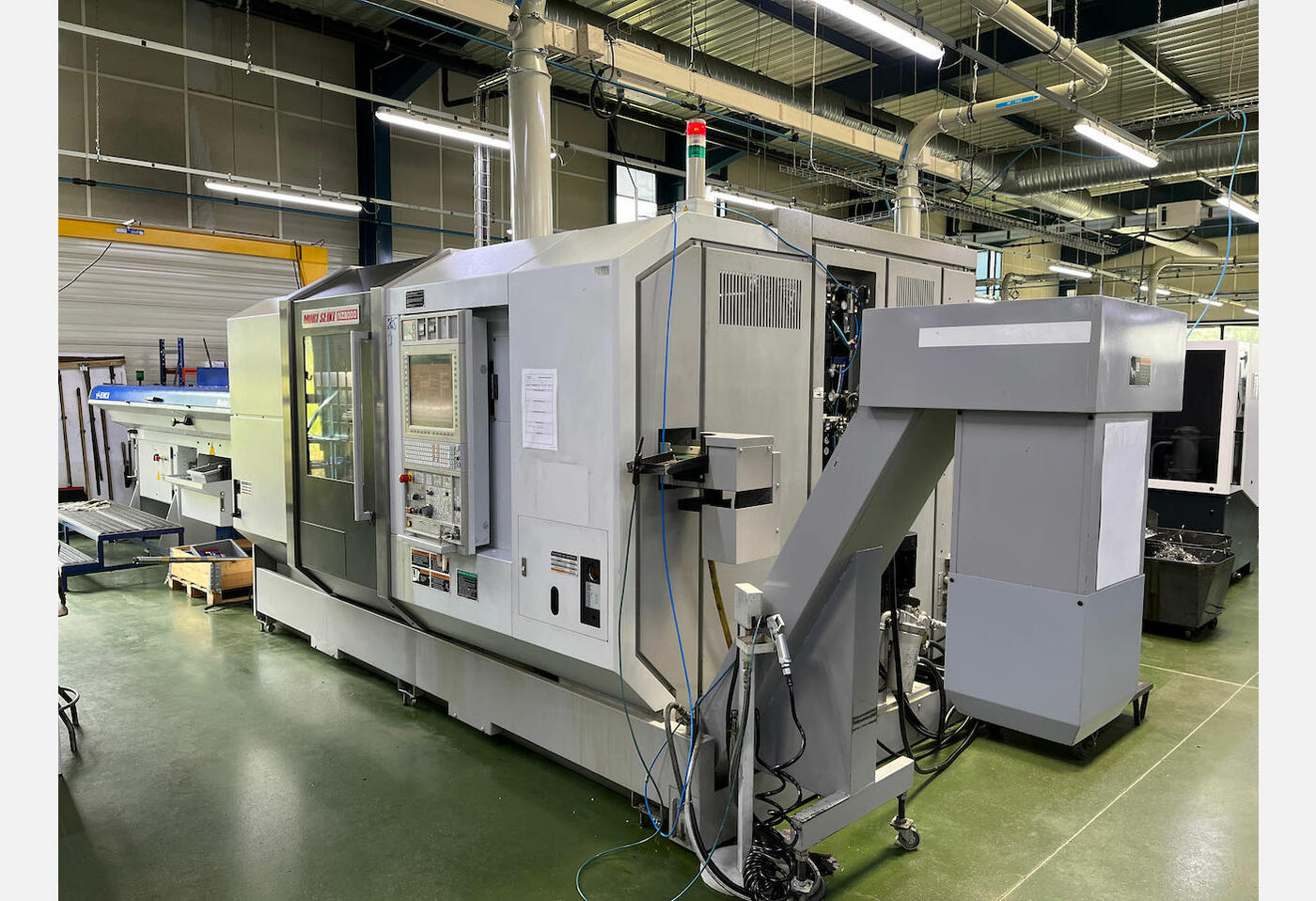
What is the average lifespan of a machine tool?
The lifespan of a machine tool depends less on its age than on how intensively it has been used and how rigorously it has been maintained. A well-maintained cast iron bed keeps its dimensional stability for several decades, whereas the electronic components age much faster.
Several factors directly influence this longevity:
- The number of operating hours per year and the type of materials machined
- The quality of preventive maintenance, particularly lubrication and clearance checks
- Workshop conditions, especially humidity and temperature variations
- The load applied to the spindle and compliance with recommended machining tolerances
Under these conditions, a machining center or a well-maintained grinding machine can remain fully operational twenty to thirty years after it was built. This mechanical longevity is exactly what makes the used equipment market so relevant for industry.
Can a used machine tool be financed like a new one?
Yes, and this is a misconception that still holds many manufacturers back. Banks and financing bodies provide financing for used machine tools through the same mechanisms used for new equipment: leasing, finance rental, or a standard business loan. The main difference lies in the depreciation period, generally shorter, and in the residual value assessment that some institutions require before granting financing.
One point deserves attention: the resale value of a well-maintained machine remains a strong argument with lenders, as it limits the risk taken on the transaction. A used bar feeder or milling machine, properly documented and backed by a maintenance history, can therefore obtain financing terms comparable to those offered for new equipment.
What warranties can be expected on a used machine tool?
The warranty varies considerably depending on the sales channel. A private sale, common on general marketplaces, usually offers no protection after the purchase. A specialized dealer, on the other hand, provides a documented inspection before shipping, a contractual warranty on essential components, and often support with commissioning.
At SAMO, every machine tool is tested under working conditions before being put back up for sale, whether it is a single-spindle lathe or a more complex piece of equipment. This verification significantly reduces the risk of discovering a hidden defect after installation in the workshop.
How do you check the accuracy of a machine tool before buying it?
The accuracy of a machine is checked on several levels: spindle concentricity, the flatness of the surface plate or table, and the absence of excessive play in the travel axes.
On a grinding machine, this check also covers the condition of the grinding wheel and the consistency of the feed rate.
On a bar feeder attached to the machine, checking the guide diameter prevents stray vibrations that would otherwise directly affect the surface finish of the parts produced.
A test run under load, using a part representative of your production, remains the most reliable way to validate these criteria before making any commitment to purchase.
Does a used machine tool require more maintenance than a new one?
Not necessarily, provided it has been properly rebuilt. A new machine also goes through a break-in period during which fine adjustments are sometimes still needed. A used machine, once brought back up to standard, moves straight into a standard preventive maintenance routine: level checks, periodic lubrication, and inspection of mechanical clearances.
Attention should focus above all on the machine's origin and the traceability of its past maintenance. A milling machine that has run three shifts a day without documented follow-up will need more attention than one used on a single shift with an up-to-date maintenance log.
Making the right choice for your workshop
These questions come up almost systematically among manufacturers considering the purchase of a used machine tool, and the answers often depend less on the machine itself than on the rigor of the seller. Thorough reconditioning, complete documentation, and support with financing turn a used purchase into a secure industrial investment.
Browse our full range of inspected and reconditioned machines in our category pages, or contact our team for advice tailored to your production.
Frequently asked questions
What is a reconditioned machine tool?
It is a machine whose wear parts have been inspected and replaced, without a full teardown of the bed, unlike a rebuild.
What is the average lifespan of a machine tool?
A well-maintained bed can run for twenty to thirty years, with longevity depending mainly on maintenance and usage rate rather than the machine's age.
Can a used machine tool be financed like a new one?
Yes, leasing and finance rental also apply to used equipment, generally with a shorter depreciation period.
What warranties can be expected on a used machine tool?
With a specialized dealer like SAMO, every machine is tested before sale and comes with a contractual warranty on essential components.