 EN
EN
 DE
DE
 ES
ES
 FR
FR
Common mistakes when buying used machine tools (and how to avoid them)
In an industrial context marked by pressure on costs, supply lead times and the need to maintain a high level of performance, second-hand machine tools are emerging as a credible alternative to new ones. But buying a second-hand machine tool is not something you can improvise. The wrong choice can quickly turn an economic opportunity into a lasting technical constraint.
The second-hand machine tool market is now mature, structured and dynamic. It offers a wide choice of high-performance equipment, particularly in machining and bar turning. But this abundance also masks pitfalls that are well known to professionals in the sector. The aim of this article is clear: to help you secure your industrial investment by identifying the most common mistakes and explaining how to avoid them, thanks to SAMO's expertise.
Why buying a second-hand machine tool involves risks
The stakes are not just financial. A machine tool is at the heart of the production process. An unsuitable choice can lead to lost production rates, quality problems, or even repeated production stoppages. The impact can be measured in lost hours, non-compliance with quality standards, scrap and pressure on customer deadlines.Unlike new machines, second-hand machines require an in-depth analysis of the actual condition of the machine, its history and its suitability for the workshop's current and future needs. That's why expert advice is vital, especially when it comes to complex equipment. For a better understanding of the specific features of each piece of equipment, we recommend that you consult this guide to machine tool types.
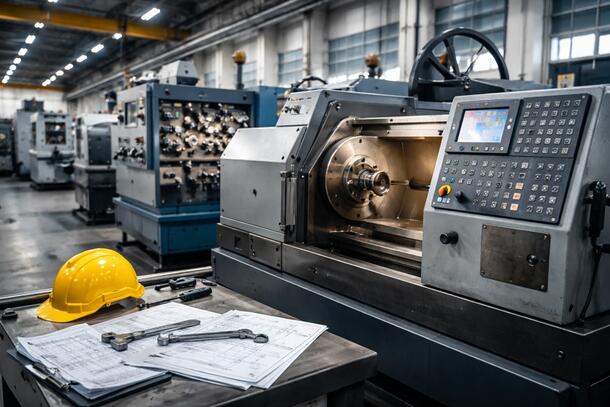
The most common mistakes when buying a used machine tool
Mistake No. 1: Focusing solely on price
An attractive price can mask an operating problem. A used machine tool that is undervalued often conceals significant indirect costs: extensive overhaul, complex transport, installation, operator training or even unplanned machine stoppages. The total cost of ownership should always take precedence over the advertised purchase price.Mistake No. 2: Failing to analyse the machine's history and actual condition
Hours of operation, previous operating conditions, production environment, maintenance carried out or not carried out: these factors directly affect the future reliability of the machine. Undetected mechanical or electronic wear and tear can quickly lead to recurring breakdowns.A serious analysis must be based on rigorous technical checks and a maintenance-oriented approach. In this respect, reading this dossier on the maintenance of machine tools provides useful insights.
Mistake no. 3: Choosing the wrong machine for the job
Oversizing or undersizing a machine is a common mistake. A machine that is too complex will be expensive to operate, while insufficient equipment will limit productivity. The analysis must take into account the type of parts produced, volumes, tolerances and future prospects.Depending on the application, the choice may be between a CNC machining centre, a CNC lathe or a multispindle lathe, each of which responds to very different industrial logics.
Mistake No. 4: Neglecting the availability of parts and after-sales service
A high-performance machine without technical support quickly becomes a weak point. Obsolete machines or machines from brands that are not widely followed expose manufacturers to risky supplier dependency. Conversely, working with a specialist capable of supplying spare parts is a guarantee of peace of mind.In particular, SAMO offers spare parts for machine tools for benchmark brands such as Tornos and Wickman, guaranteeing the longevity of your equipment.
Mistake no. 5: Underestimating the value of a rebuilt machine
A rebuilt machine tool should not be confused with a second-hand one. Rebuilding involves a complete overhaul, integrating mechanical, automation and safety aspects. The result is a reliable, high-performance machine that lasts.The benefits in terms of reliability and longevity are detailed in this article dedicated to the advantages of rebuilding machine tools.
How to avoid these mistakes: the SAMO method
Technical audit before purchase
Each machine offered by SAMO undergoes in-depth checks: geometry, mechanics, electricity, automation and functional tests. This approach enables us to anticipate risks and guarantee equipment conformity.Customised advice based on your production
Volume, precision, production rate, industrial sector: our recommendations are systematically tailored to the actual context of the end user. This approach avoids standardised choices and maximises return on investment.Securing your investment
The rigorous selection of machines, combined with support before, during and after the sale, means that the purchase of a second-hand machine tool can be transformed into a genuine lever for industrial performance.Why put your trust in a used machine tool expert?
When you call on a specialist like SAMO, you benefit from twofold expertise: in-depth knowledge of machine tools and a long-term industrial vision. This combination makes it possible to secure technical and economic choices while supporting the growth of workshops.FAQ - Buying used machine tools
Is a second-hand machine tool reliable?Yes, as long as it has been inspected, reconditioned if necessary and accompanied by appropriate technical support. Reliability depends above all on the quality of the upstream expertise.
What's the difference between a used machine and a rebuilt machine tool?
A rebuilt machine benefits from a complete overhaul, unlike a standard used machine. It offers greater guarantees in terms of performance and durability.
Does SAMO offer post-purchase support?
Yes, SAMO provides technical support, access to spare parts and long-term assistance to guarantee continuity of production.
Conclusion
Buying a second-hand machine tool is a strategic decision that commits the production tool over the long term. Identifying common mistakes, relying on recognised expertise and favouring a global approach are the keys to a successful investment. With SAMO's support, second-hand machine tools become a real asset for industrial performance.